Southern California commercial kitchens run fast, hot, and under pressure—exactly the conditions where hidden fire hazards thrive inside your exhaust system. Even if your hood looks clean from the outside, dangerous buildup can still be lurking in the places you rarely see. Over time, that hidden risk can turn a minor flare-up on the line into a serious duct fire that races through your building.
Let’s review the top five fire hazards hiding in your Southern California exhaust system and how proactive hood cleaning and maintenance help keep your team, guests, and business safe.
1. Grease Buildup Deep in the Ducts
The single biggest hidden fire hazard is grease that accumulates out of sight—in vertical risers, long duct runs, elbows, and hard-to-reach sections above ceilings or roofs. Even if the hood and visible areas look clean, grease-laden vapors travel up through the system and cool on the duct walls, slowly forming thick, highly flammable layers.
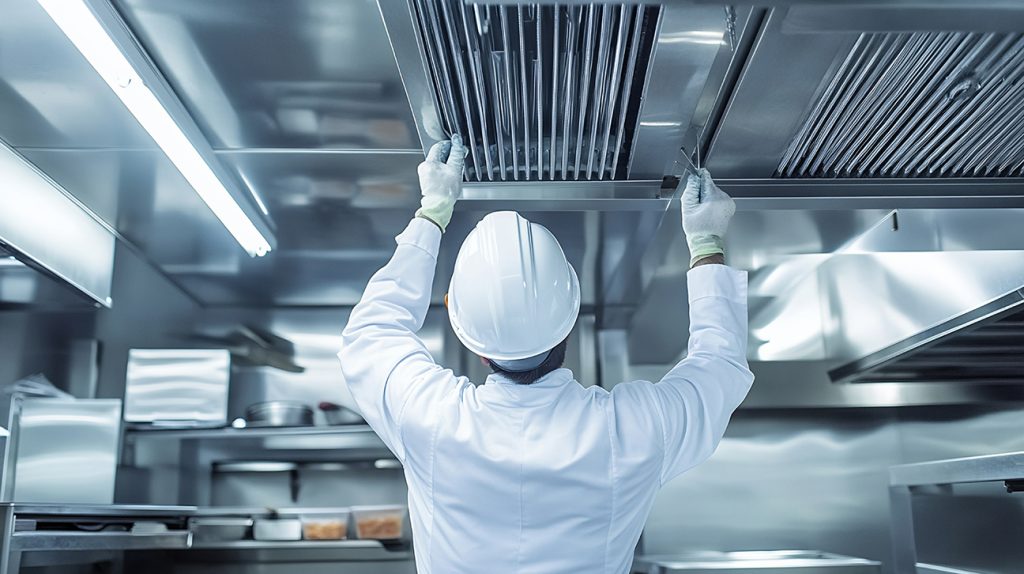
Once a fire reaches this fuel, it can spread quickly through the ductwork, making it difficult and dangerous for firefighters to access. Professional exhaust cleaning that reaches “hood to fan” is critical to remove grease down to bare metal and keep you aligned with NFPA 96 recommendations for commercial cooking operations.
2. Clogged or Neglected Hood Filters
Hood filters are your first line of defense against grease entering the rest of the exhaust system—but only if they are clean and properly installed. When filters are clogged, missing, or the wrong type for your equipment, grease bypasses them and coats the plenum, ducts, and fan components much faster.
Dirty filters also restrict airflow, trapping more heat and smoke over the cooking line and increasing the chance that a small flame or flare-up will ignite nearby deposits. Regular filter cleaning and timely replacement keep air moving, reduce grease migration, and help your suppression system work the way it was designed.
3. Exhaust Fans Coated in Grease
Upblast exhaust fans on the roof and inline fans in the duct are often overlooked during day-to-day operations. Yet these components can quietly collect grease on blades, housings, and within fan bowls, creating both a fire and mechanical hazard. As buildup grows, the fan works harder, runs hotter, and is more likely to fail at the worst possible time.
If a fire reaches a grease-coated fan, it can push flames and superheated gases further along the duct path or even onto the roof. Routine hood cleaning that includes fan disassembly (where possible), cleaning, and inspection helps maintain safe airflow, extends equipment life, and reduces the risk of catastrophic failure during a fire event.
4. Hidden Grease in Plenums, Seams, and Access-Panel Gaps
Even in systems that are cleaned periodically, certain “shadow” areas can still harbor dangerous residue. Grease can hide behind loose panels, in plenum corners, around poorly sealed seams, or in sections without proper access doors. These pockets of residue are easy to miss with quick, superficial cleanings but can still feed a fire once temperatures rise.
NFPA 96 calls for exhaust systems to be designed and maintained so they are accessible for inspection and cleaning. Working with trained technicians ensures access doors are in the right places, hidden areas are opened up and degreased, and your system isn’t quietly stockpiling fuel behind sheet metal.
5. Skipped Maintenance on Suppression-Adjacent Areas
Many operators focus on the cooking line and nozzles when they think about fire suppression, but the surrounding exhaust surfaces matter just as much. Grease buildup above appliances, around nozzles, and near fusible links can interfere with how a suppression system activates and how effectively it blankets the hazard zone.
If the hood and duct surfaces near the discharge points are heavily coated, a fire can spread faster than the system can control it, or reignite after discharge. Keeping suppression-adjacent areas clean and clear supports your system’s performance and aligns your overall setup with modern fire safety best practices for commercial kitchens.
Reducing Grease Fire Risk With Professional Exhaust Cleaning
The biggest danger with exhaust system fire hazards is how easy they are to underestimate—especially when operations are busy and the hood “looks fine” from the front of house. A qualified exhaust cleaning partner can help you:
- Inspect the entire system for hidden grease in ducts, fans, plenums, and access-limited areas.
- Clean to bare metal from hood to fan at intervals that match your cooking volume and fuel type.
- Replace filters, identify damaged components, and flag issues that could affect inspections or insurance.
By treating your exhaust system as critical life-safety equipment—not just another piece of metal in the kitchen—you dramatically lower your fire risk and give your staff a safer place to work. This is exactly why regular, documented hood cleaning and NFPA 96–aligned maintenance are considered non-negotiable for responsible commercial kitchens.
There is no doubt that a clean and well-maintained kitchen is a must for your business’s success. At Icon Fire Prevention, as experts in kitchen hood cleaning, we ensure that fire safety regulations are not just a compliance issue but a key aspect of operational success. Our end-to-end kitchen hood cleaning process is designed with your convenience in mind, minimizing disruptions to your kitchen operations. From the initial inspection to the final review, our transparent and communicative approach keeps you informed every step of the way.
We service restaurants and commercial kitchens in various types of setting, including:
Restaurants of all sizes, including chain restaurants and mom and pop establishments
Schools, universities and educational facilities
Hotel and Hospitality kitchens
Event Venues, such as banquet halls and convention centers
Churches and religious facilities
Our kitchen exhaust cleaning services go beyond surface cleaning, addressing the critical components that contribute to a safe and efficient kitchen environment. View our Before & After Gallery to see the results for yourself, or call us today for a free estimate. We are available 7 days a week!